
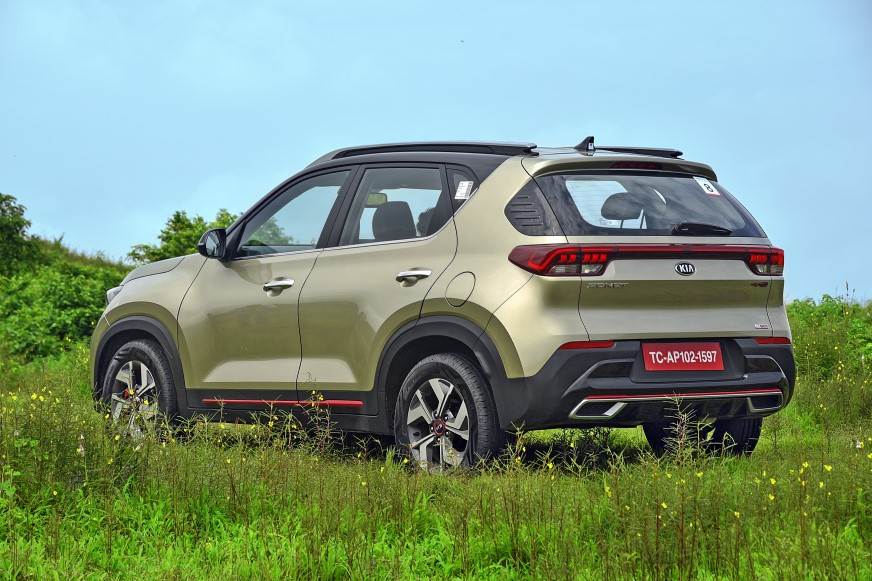
Kia really made a mark in India with its mid-size SUV Seltos, and now, with its compact SUV the Sonet, Kia moves a step forward in Indian Market. Like the Seltos, the Sonet is an all-new model for Kia that made its global debut. The Sonet shares its platform with the Hyundai’s mid-size SUV, the Venue.
Even though, both the SUV’s share the same platform, the two Korean firms take a very divergent approach in terms of providing the driving experience. The exteriors and interiors bear no similarity, and both SUV’s feel a bit different to drive as there is a subtle change in the Engine and suspension. Kia claims that it received around 6,523 bookings on the first day itself when bookings opened in August 2020.
Specifications of Kia Sonet HTX+ 1.5 Diesel
Petrol Variants:
| Variant | Engine Displacement (cc) | Transmission |
| G 1.2 HTE | 1197 | Manual |
| G 1.2 HTK | 1197 | Manual |
| G 1.2 HTK+ | 1197 | Manual |
| G 1.0 HTK+ IMT | 998 | Intelligent Manual |
| G 1.0 HTX IMT | 998 | Intelligent Manual |
| G 1.0 HTX+ IMT | 998 | Intelligent Manual |
| G 1.0 HTK+ DCT | 998 | Automatic |
Diesel Variants:
| Variant | Engine Displacement (cc) | Transmission |
| D 1.5 CRDI HTE | 1493 | Manual |
| D 1.5 CRDI HTK | 1493 | Manual |
| D 1.5 CRDI HTK+ | 1493 | Manual |
| D 1.5 CRDI HTX | 1493 | Manual |
| D 1.5 CRDI HTX+ | 1493 | Manual |
| D 1.5 CRDI HTX+ AT | 1493 | Manual |
| D 1.5 CRDI GTX+ AT | 1493 | Manual |
| D 1.5 CRDI HTK+ AT | 1493 | Automatic |
Dimensions
| Parameters | Dimensions |
| Length (mm) | 3995 |
| Width (mm) | 1790 |
| Height (mm) | 1642 |
| Wheelbase (mm) | 2500 |
| Ground Clearance (mm) | 205 |
| Boot Space (in L) | 392 |
| Fuel Tank Capacity (in L) | 45 |
Engine & Powertrain
| Engine Type | 4 Cylinders (Turbocharged) |
| Fuel Type | Diesel |
| Displacement | 1493 cc |
| Maximum Power | 100 bhp @ 4000 rpm |
| Maximum Torque | 240 Nm @ 1500 rpm |
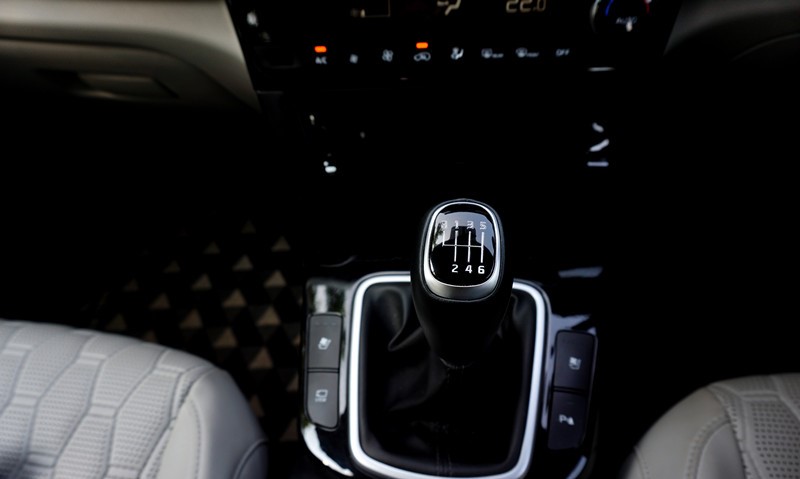
| Geartrain | 6 Gears (Manual Transmisson) |
| Drivetrain | Forward |
Features of Kia Sonet
Highlighting Features
- BOSE premium 7 speaker system
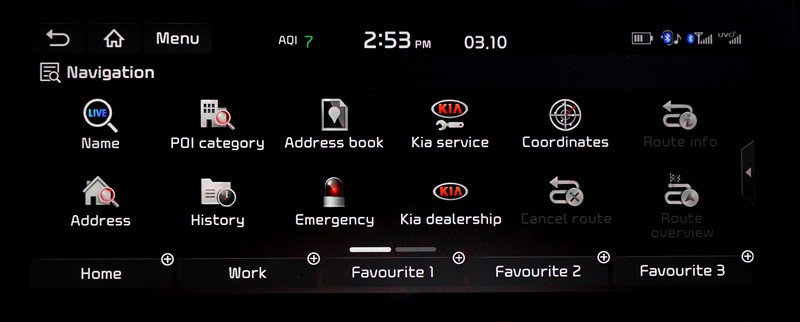
- 26.03 cm (10.25″) HD Touchscreen Navigation
- UVO connected car with OTA
- Ventilated Driver and Passenger seats
- Smart pure air purifier with Virus protection
- Advance 10.67 cm (4.2″) Color instrument cluster
- Leatherette seats with Silver stitching – Beige & Black
For the detailed Specifications on Kia Sonet, Refer to the following link
https://www.kia.com/in/our-vehicles/sonet/specs.html#trim-4
https://www.autocarindia.com/car-news/kia-sonet-specifications-and-variant-details-revealed-418346
Review
Exterior
Kia never fails to impress its customers with the exterior design of the car. Similar to the Seltos, this mid-segment SUV is also designed with the Kia’s traditional “Tiger Nose” grille at the front with chrome treatment which gives it a sportier look. Kia used the chrome finish around the fog lamps, Door handles and the window line. As Kia’s first Indian SUV, the Seltos, Sonet also has its sibling competitor, the Hyundai Venue. Like the Seltos, the Sonet will be available in 2 variant categories – Tech Line and GT Line. Both categories will come in 3 variants – HTE / GTE, HTK / GTK and HTX / GTX, where E stands for Energy, K for Klass and X for eXtreme. Comparing the Tech line and the GT line, the GT line gets GT batch & red highlights on the alloy wheels, grill, bumper.
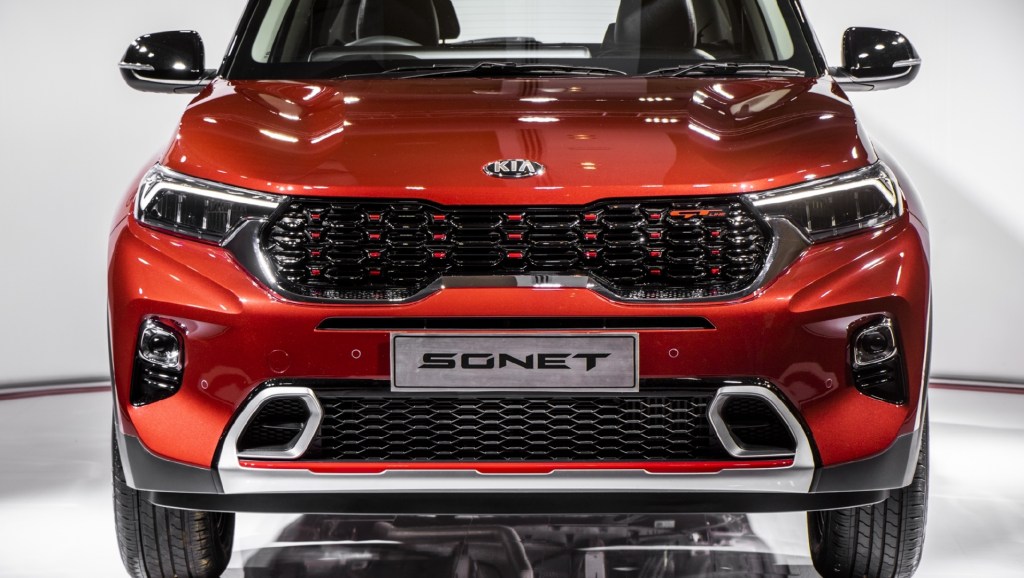
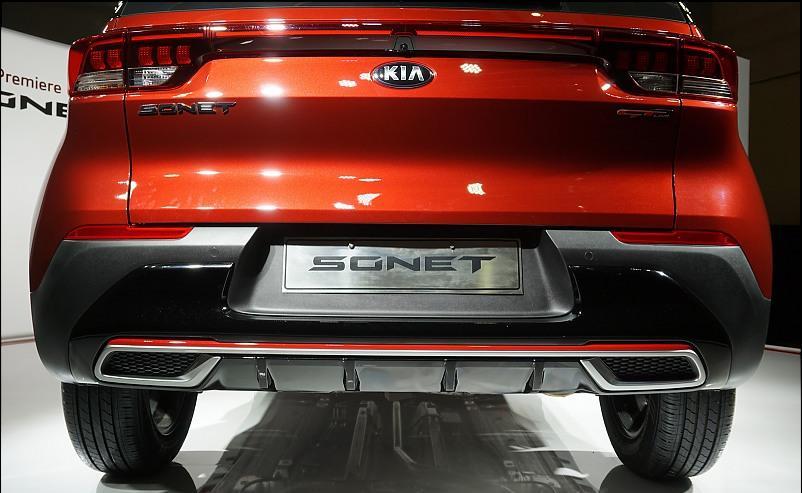
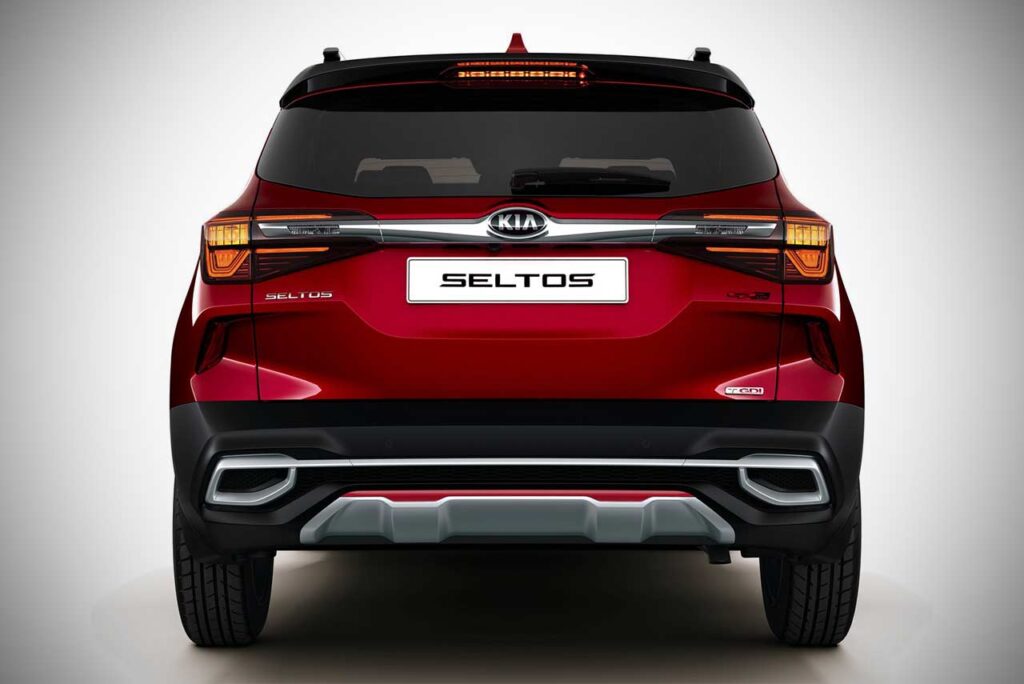
The Tiger Nose Grille is flanked by a pair of LED Projector Headlamps with LED DRL’s for good measure. The car looks like a perfect mid segment compact SUV, when it is looked from the sides of the car. At the rear, the Sonet gets a pair of LED tail lamps which is connected by a chrome strip. There are dual dummy exhausts at the bottom of the SUV which makes the SUV sportier from the rear.
Rear bumper stretches all the way up to the tail-lamps. It also gets some glossy black love. Check out the two parking sensors and slim reflectors. The bumper gets a silver insert and this variant being from the GT Line trim level, has a red insert as well. What look like openings for the exhaust pipes are actually sealed (à la Mercedes). Below is the diffuser with glossy black fins.
Interior
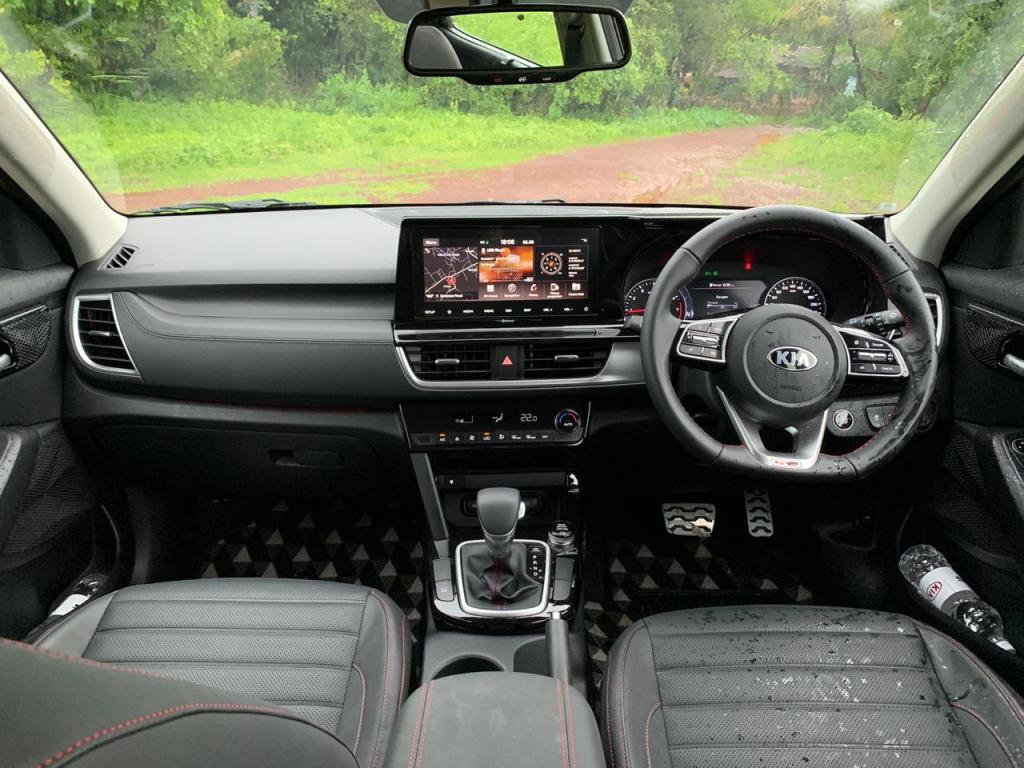
In terms of interior space, it’s no surprise the Sonet is similar to the Venue, and that means space is not class leading. The rear seat is quite comfortable except the thigh support. At the front, the seats are large, well bolstered and ventilated which is a big plus point for the drivers to travel a long distance during summer. These Ventilated seats are a feature of Kia’s Indian first SUV, the Seltos.
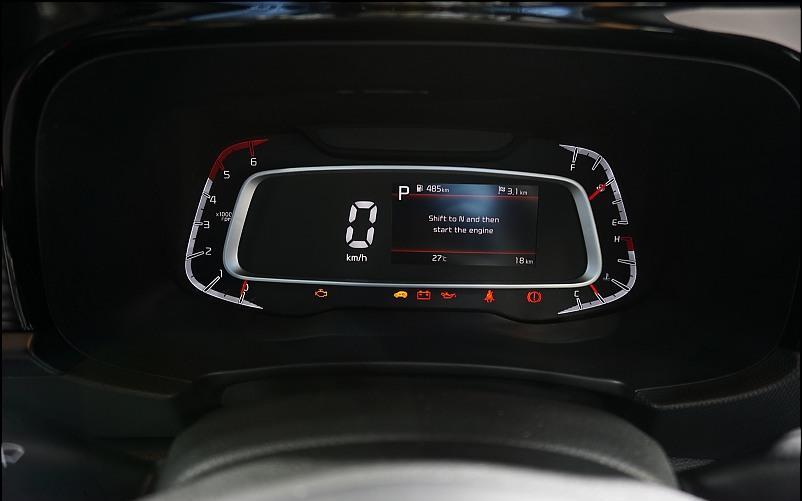
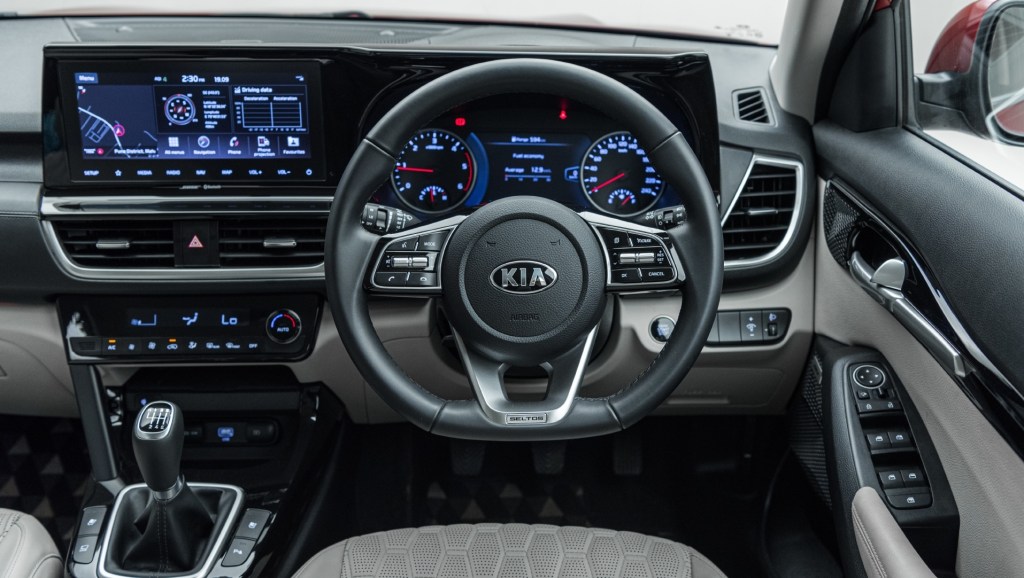
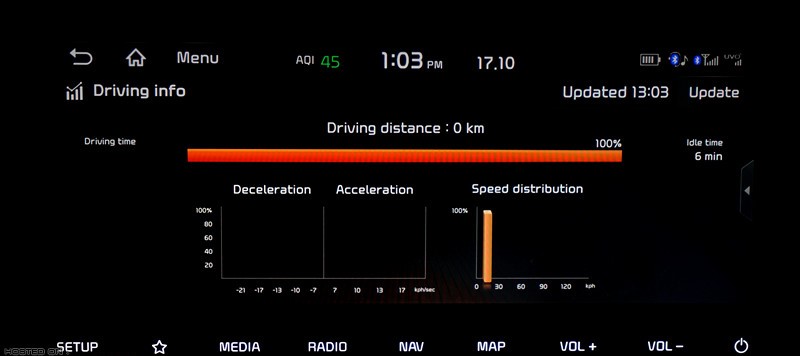
Where the Sonet really scores is with cabin quality. The choice of materials used gives a quality feel that’s not just better than rivals (the Venue included), but also cars of a segment above. The instrument cluster has an analogue tachometer on the left + analogue temperature / fuel gauges on the right. A digital speedometer with a 4.2″ MID are in the middle. This SUV’s instrument cluster contains tyre pressure monitoring system, Distance to Empty counter, Average Fuel Consumption and Outside Temperature Display.
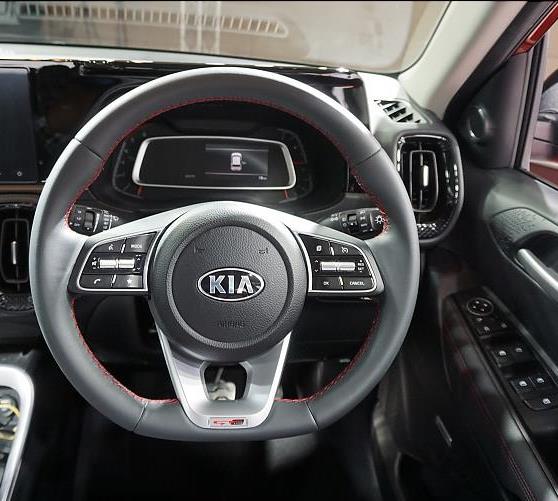
GT Line gets a 3-spoke, meaty flat-bottom steering wheel with red stitching and thumb contours. It looks very premium. Buttons for operating the entertainment and telephone are located on the left spoke, while those for the MID and cruise control are on the right spoke. The toggle switches are finished in silver. Steering has rake adjustment only – we wish such a loaded car also had telescopic adjust.
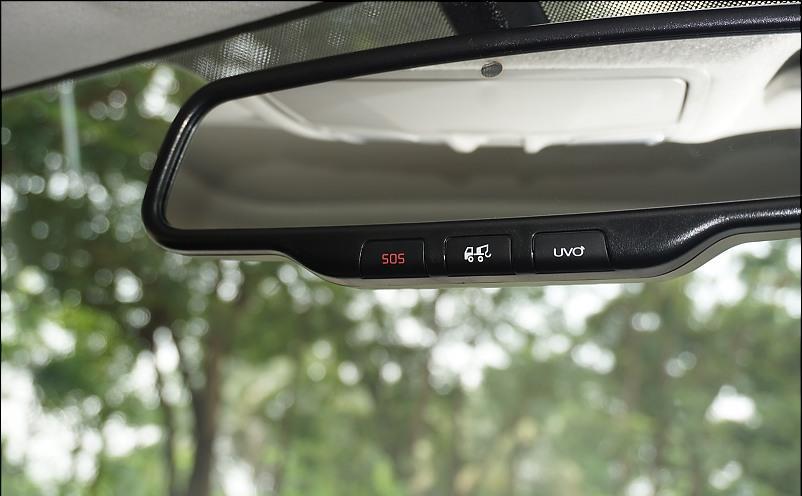
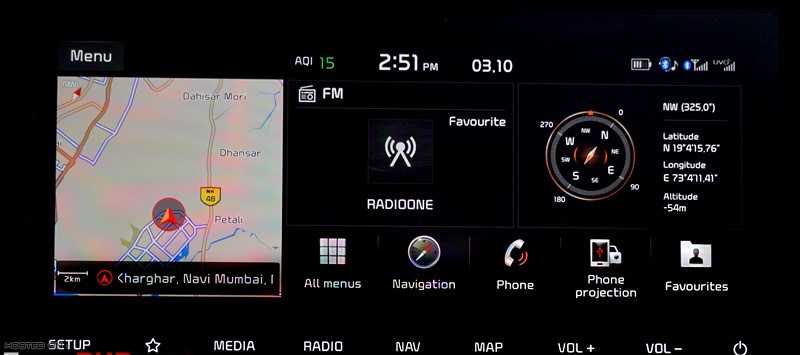
The Internal Rear View Mirror houses 3 buttons – SOS, Which makes a emergency call to the Kia Customer Care, Tow button, which makes a call to the Kia Roadside Assistance and the third button which will launch UVO (telematics). Also, the IRVM is equipped with auto dimming feature. The Infotainment system of the car gets 50+ connecting features including the Kia Voice Control that has been provided with the Kia Seltos with the 10.25 inch HD Touchscreen unit. With the Voice Control feature, the features of the car can be easily accessed by simply saying Hello Kia (Hello Kia, Roll down the driver’s window).
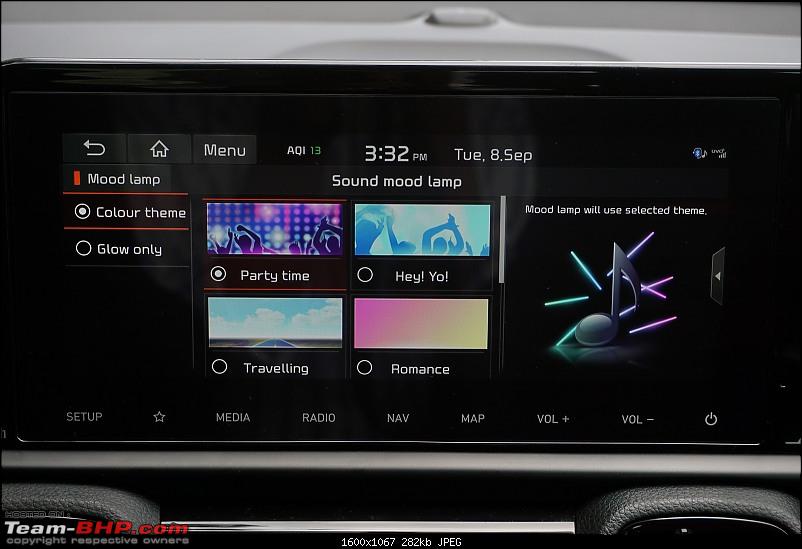
The Cabin also gets some of the features that are already provided with the Kia Seltos. Some of them are the Virus Protection Air Purifier, which provides the clean air for breathing inside the car, electronically operated Sun Roof, Mood lights which can be changed using the infotainment system and can be made to change according to the music along with the brightness levels of the lights.
Performance
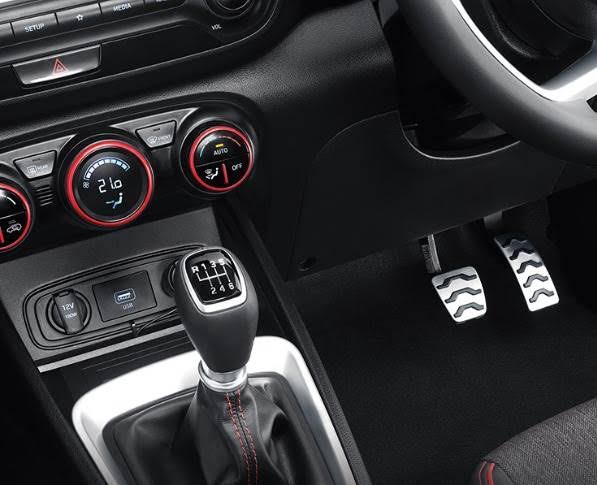
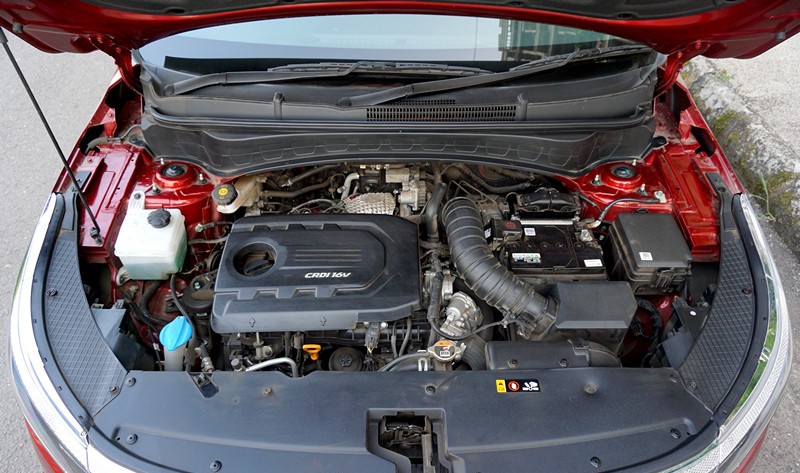
The Sonet comes with a 1.0L turbocharged petrol, a 1.2L naturally-aspirated petrol and a 1.5L turbocharged diesel engine. Kia also offered a 7-speed DCT, a 6-speed clutchless Intelligent Manual Transmission (iMT) and 5 and 6-speed manual transmissions. There is also a diesel automatic variant with a 6-speed torque converter. This will be the first-time that a proper AT gearbox will be mated to a diesel engine in the sub-4 m SUV segment. The Tata Nexon and Mahindra XUV300 diesels got AMT gearboxes. Heck, other than the Amaze CVT & now the Sonet, there is a serious dearth of good Diesel ATs in the compact car segment. The Intelligent manual transmission was provided by Hyundai in its mid segment SUV, the Venue last month. As a sister company of Hyundai, Kia also provides the Intelligent Technology in its Mid SUV Sonet. The imt is a amazing technology which provides the feel of the Manual Transmission and the comfort level of Automatic transmission. The Fully automatic transmisson uses 2 sensors in which 1 is used for controlling the clutch of the Vehicle and another one for shifting the gears based on speed of the vehicle. In imt, Only one sensor is provided which will take care of the Clutch.
For detailed information on Intelligent Manual transmission, visit the following link
https://www.autoblog.com/2020/06/26/kia-rio-intelligent-manual-transmission-clutch-by-wire/
The Insulation is not provided under the bonnet. Even the Hyundai Venue comes without the Insulation. Ride quality on the diesel and petrol are both quite similar. The only negative bit is, over a few sharp ruts, you feel a thud, and it tends to heave you upwards when cresting speed breakers.
Driving the Sonet – Diesel Automatic
Interestingly, the diesel is the same powertrain that does duty in the Seltos, putting out an identical 115hp and 250Nm. The diesel manual gets the fixed-geometry-turbo engine (instead of the variable-geometry unit on the auto) and puts out a lower 100hp and 240Nm of torque.
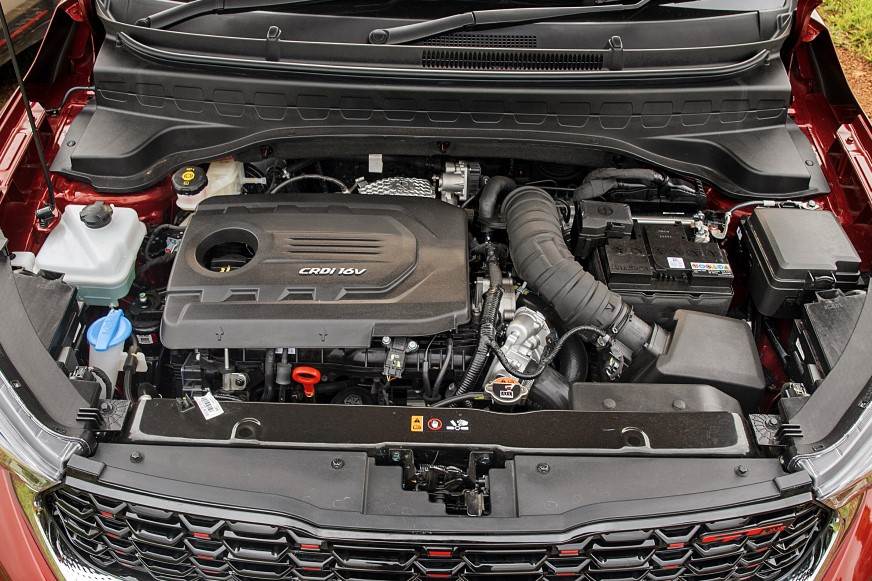
he 115hp engine is an absolute gem. Refinement is top notch, and noise and vibrations are muted. At high revs it does get a bit gruff, but never really sounds harsh or thrashy. Performance, too, is excellent, with very little turbo lag, and once you get past the 2,000rpm mark, there is a step up in power delivery. From then on, you get a satisfyingly seamless surge of power up to 4,200rpm, at which point the gearbox will upshift even in manual mode.
What’s nice is that the auto ‘box is really very well matched to the broad torque spread of the diesel powerplant, and in the Normal drive mode, it delivers a very intuitive drive experience. It seldom feels like it’s in the wrong gear and the car does exactly what your right foot tells it to. Try to change pace and it will do so smoothly; put your foot down to overtake traffic and the gearbox will drop just the right number of cogs to give you enough grunt, and, as expected of a torque convertor unit, the power comes in nice and smooth.
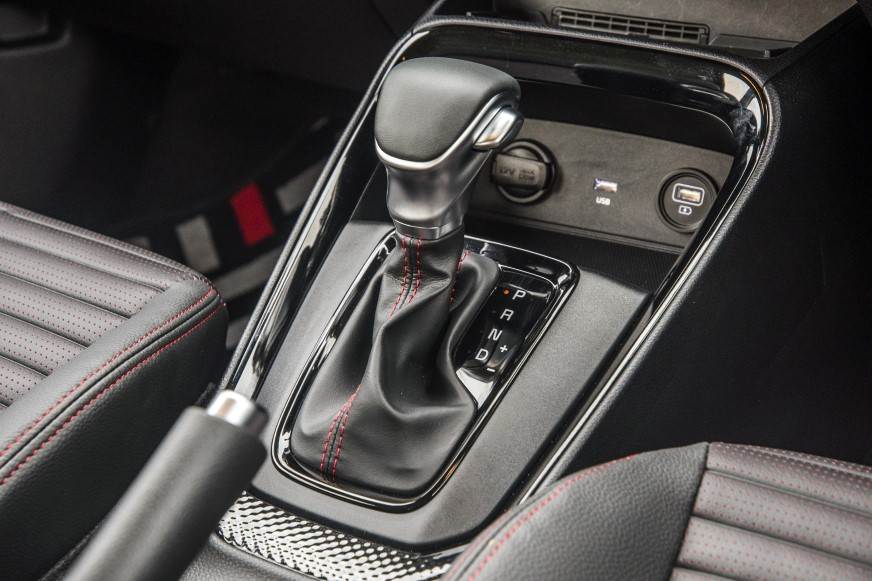
Sport mode, of course, does bring in a more aggressive feel, with the ’box holding on to the lower ratios a bit longer. But so useable and intuitive is the Normal mode that for everyday driving and even some quick dashes, it will prove to be enough for most. There’s also an Eco mode, and here too it impresses, as it turns out to be quite useable and doesn’t throttle the engine in the interest of efficiency.
Ride Quality and Handling
In terms of handling, the diesel and petrol feel a bit different. The diesel has a slightly heavier steering and is a bit more nose heavy. The petrol felt nicer to steer and turned into corners with a bit more agility. Both cars feel nicely planted and offer a great degree of confidence at high speeds, which makes them good long-distance cruisers. Overall grip through corners is good, and body roll is well contained. The steering feel on both is pretty similar – there isn’t much feedback, but on the plus side, it is light enough in the city and has enough weight at higher speeds. The light controls, decent all-round visibility, tight turning circle and compact dimensions make the Sonet very urban-friendly and easy to slot into tight parking spots.
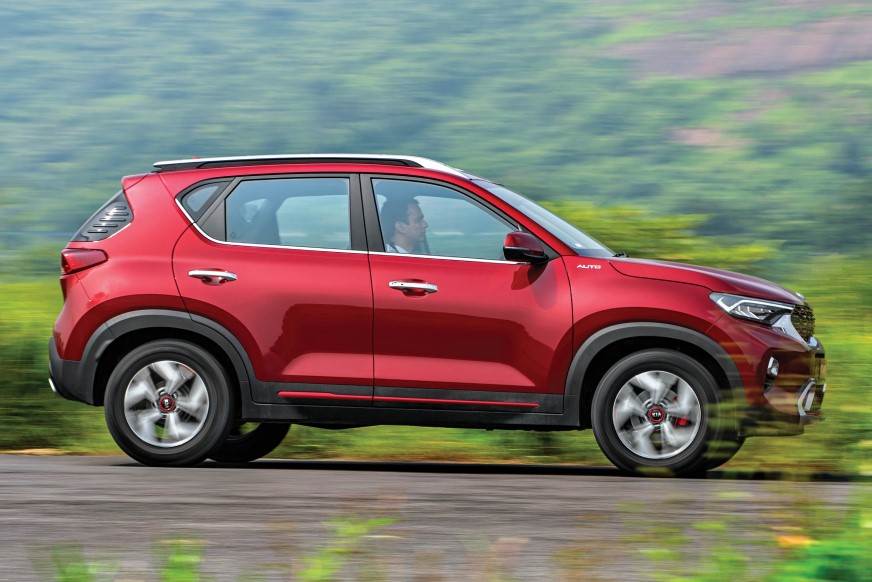
The drive modes do alter the steering feel, though the influence is minimal and only felt in Sport mode, with the steering firming up a bit. Unique to the segment, the Sonet also offers traction modes (Snow, Mud and Sand). We couldn’t get round to testing these, but will certainly go through them in detail in our full-blown road test.
Seldom does a manufacturer speak of targeted sales volumes, rarer still for them to do so a couple of months before the model’s actual launch. But such is the confidence Kia has in its latest product, it has revised the Sonet’s sales target upwards from 70,000 units to 1,00,000, and that too in the midst of a pandemic! So is the company’s faith well-placed?
Verdict from Autocar India
Aside from the not-so-spacious back seat, it’s hard to fault the Sonet. It’s beautifully styled with good proportions and lots of striking details, the interiors are very well appointed, finished to a high order and packed with features, many of which are first in class. It’s also effortless and very enjoyable to drive, and the diesel auto overshadows the turbo-petrol in almost every way; it’s absolutely brilliant. There are also other powertrain options to choose from, depending on your budget.
For more information on Kia Sonet, Watch the below video
Contact :
gokulnathslvm@gmail.com

 Automobile Reviews